

Sabrina Carpenter’s Album Cover: Satire, Submission, or Just a PR Stunt?
Opinion.
So, I’ve sat on this Sabrina Carpenter situation for a few days as I wanted to take my time to figure out what my own opinion on this was, and not be overly swayed by the loudest voices out there.
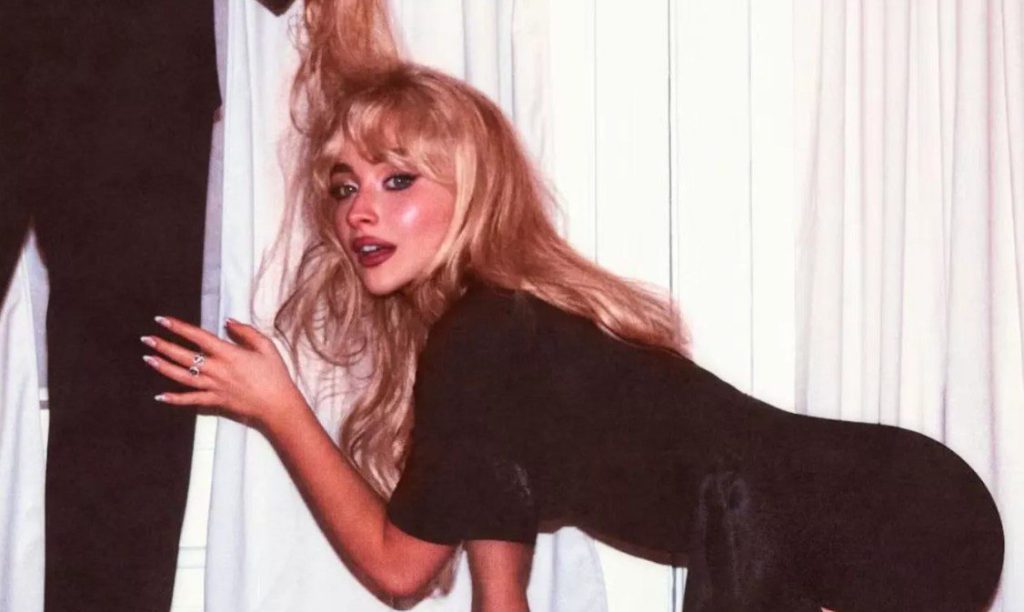
For anyone playing catch up, Sabrina Carpenter has released her latest album cover, a photo where she is submissively on her knees with an unknown person in a black suit is grabbing a handful of her hair. Alongside this is a smaller image with a dog collar saying “man’s best friend”.
There’s two overwhelming positions on this. One is that it’s deliberately targeting the male gaze, communicating the wrong message in this political time and sending women’s rights back decades. The other position is that it’s powerful satire.
So let’s unpack this.
The Male Gaze
It’s deliberately targeting the male gaze. Satire or not (and we’ll come to this shortly). It’s sexual and provocative and trying to pretend it is anything else honestly undermines any further position or opinion on the matter.
The wrong message
It is sending the wrong message. In the current climate of rampant misogyny and the very real rolling back of women’s rights in parts of the world, sending out a message of women as submissive doesn’t feel like the right thing to do.
Consensual sexual submission relies on trust, communication, and clear boundaries. None of which are easily communicated through an album cover featuring a dog collar labelled “man’s best friend” and a woman on her knees with someone gripping her hair. The imagery veers uncomfortably close to framing women as pets or property. What some might interpret as a depiction of empowered sexuality, others may find deeply triggering, especially in light of real-life instances of abuse, such as the footage of Diddy pulling Cassie Ventura by the hair. If Carpenter doesn’t recognise the weight and implications of that parallel, it casts doubt in my mind on her ability to navigate the kind of layered nuance she may be aiming for.
Or is it just misguided?
Having said that, I don’t think it’s setting women’s rights back decades. Is it misguided? Sure. But to suggest it’s powerful enough to undo all of the hard work done by female rights activists is giving this image more credit than it’s worth.
It’s a poor choice that’s likely going to hurt Carpenter in the long run, and cause some unwanted commentary online in the short term, but let’s not pretend that this image alone is going to have any real lasting damage. It’s just one badly timed piece of a problematic bigger picture that’s probably not the best choice from an artist who worked hard to get where she is.
Could it be satire?
Is it satire? I actually don’t know. And this is the problem. Asking us to trust that “more will be revealed” and “we’ll understand it when the album comes out”, which seem to be the biggest tropes shared by fans of the artist, are problematic in themselves.
Satire shouldn’t need to be explained. Not this much, to this many people.
Suki Waterhouse’s latest video for On This Love is satire. You know how you can tell? Because it’s really fucking obviously satire. If Green Day’s Billie Joe Armstrong were to post an album cover of himself wearing a MAGA hat without further explanation we’d all agree it’s satire because he has 30 years of opinions and song lyrics that back up his position on this.
Carpenter has neither. She’s never taken a deeply political stance on women’s rights issues. But she has written overly sexualised songs (which I don’t have a problem with at all, but you can’t have it all ways. You can’t use sexuality to sell a song one minute then claim it’s satirical the next). Nor has she clearly articulated a vision here, and whether it turns out to be an ironic take or not, the notion we should arbitrarily trust in the vision rather than read the information in front of us is what’s truly the issue is.
A crafty marketing ploy
What I think is most likely here is that it’s a deliberate ploy from Carpenter and her team. We know that social media algorithms promote content that gets people angry because they engage with it for longer and to me it feels like a calculated choice to capitalise on her recent big break by generating attention for the album.
We all know this is how younger generations are discovering music now and the more her name is appearing on social media, the more people become aware of the new album. And that in itself is clever. Do I think it’s the right thing to do? Probably not. Do I think it’ll work? Well it’s certainly got everybody talking hasn’t it?