
Submissions are now officially open for First Sounds Volume 15, offering First Nations artists a powerful platform to amplify their music across Australia’s extensive community radio network. Designed to put First Nations talent directly into the hands of passionate broadcasters, this national initiative continues to thrive as an ecosystem that delivers emerging music to audiences and drives recognition, cultural ownership, airplay, and industry momentum.
A collaborative partnership between the Community Broadcasting Association of Australia (CBAA) and Gadigal Information Service / Koori Radio (GIS), First Sounds serves as a vital bridge connecting artists with millions of listeners nationwide, fostering genuine connection, creative agency, and self-representation.
Since launching in 2020, with over 14 volumes, First Sounds now represents the continually evolving state of contemporary First Nations music in Australia and has established an unbeatable track record. The project has channelled hundreds of tracks to radio presenters, generating upwards of 10,000 community radio spins in the past 12 months alone for Volumes 10–14.
First Sounds has become a living archive celebrating the rich diversity of First Nations music from alt-pop, soul, rock, and hip-hop to country, Blaktronica, ripe with storytelling often rooted in language and Culture. With artists’ deep connection to identity and Country, First Sounds reflects how past, present and future are all inextricably linked in all forms of First Nations songmaking. Across Australia, community radio celebrates and champions First Nations artists working across languages, genres, communities and experiences.
How to Apply
First Nations musicians from across Australia are invited to submit radio-ready tracks released within the last 18 months. Submissions will be reviewed and selected by an esteemed panel of First Nations artists, broadcasters, radio programmers and music industry professionals, bringing together decades of experience across music, radio, production and creative practice.
The panel includes Thalia Skopellos, First Nations Project Coordinator at MusicNSW and producer and composer; Charlie Woods, artist and frontperson of Charlie Needs Braces; Gunai/Kurnai & Yorta Yorta artist, DJ and producer DJ PGZ and radio presenter at 3RRR; and Eora Sydney-based broadcaster Aaron Langford, presenter and producer at Koori Radio. Together, the judges bring a deep understanding of First Nations music and culture, contemporary Australian music, radio and the evolving pathways for First Nations artists to connect with audiences.
Having been featured twice on First Sounds, Charlie Woods is thrilled to join the selection panel for Volume 15: “First Sounds means being connected to a community that recognises the power of our stories, culture and creativity. It creates a space for mob to be heard, celebrated, and supported on our own terms, and I am very excited to get the opportunity to listen to new music from mob, and support the next wave of great First Nations artists.”
Successful applicants will feature on both digital releases and physical compilation CDs distributed directly to stations nationwide via AMRAP.org.au, putting their sound in front of key taste-makers and community audiences across the country.
Submission Details:
- Who can apply: First Nations musicians, bands, and producers based in Australia.
- Eligibility: Radio-ready tracks released in the past 18 months.
- Format & Distribution: Digital and physical CD distribution directly to community broadcasters nationwide via amrap.org.au.
Don’t miss the opportunity to take your music to national airwaves. Submit your song and artist profile today to shape the next chapter of contemporary First Nations music.
Application deadline is 11:59pm AEST Thursday 15 October 2026
Via: firstsounds.amrap.org.au
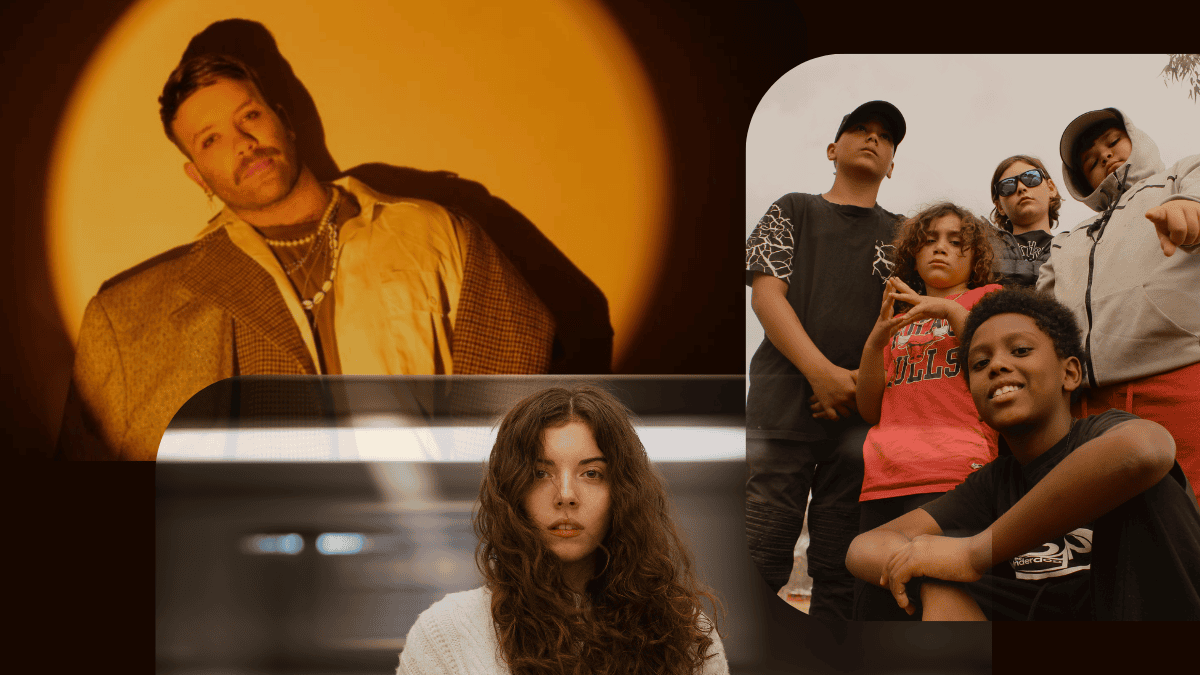
We also got a chance to chat with judges Thalia Skopellos and Charlie Woods about their involvement with this wonderful project.
Can you tell me a little bit about your background in the industry and how you became involved with the First Sounds initiative?
Thalia : I’m Thalia Skopellos, a producer and composer working under the aliases Ellatronix and Lazi Daizi, as well as under my own name for film and television composition.
My work spans electronic music, production music and screen composition, with a strong focus on emotional storytelling and creating immersive sonic worlds. Over the years, my music has found its way into projects across Apple TV, Prime Video and SBS, and I’ve had support from platforms like Ableton and Spotify, including editorial playlists such as Fresh Finds AU & NZ and Deadly Beats. I’ve also had airplay on triple j and other national radio stations.
I’m really interested in the emotional power of music and how it can be the vehicle for in depth and sometimes autobiographical storytelling.
I became involved with the First Sounds Initiative through Lance from Koori Radio, who reached out to me and asked me if I wanted to come on board, and the rest is history.
How have you seen the landscape of First Nations music evolve and change (either over your time with this initiative or more generally in your time in the industry)?
Thalia: One of the things that really stands out to me is the incredible diversity of First Nations music, and I think there’s still a lot of work to do in terms of how that diversity is recognised and represented.
I think hip-hop has played a really important role in bringing First Nations voices and stories to the forefront, but sometimes I feel like the conversation around First Nations music can be quite heavily centred on that genre. But there are so many other incredible artists working across electronic music, indie, alternative, pop, rock, folk, country and other genres who don’t necessarily receive the same level of attention or recognition.
Coming from an electronic music production and composition background, I’m particularly interested in the different ways artists experiment with sound, production and genre. There’s so much innovation happening, and I think it’s important that we create more opportunities for those artists to be heard, too.
I also think initiatives like First Sounds are valuable because they help challenge those perceptions and broaden the picture of what First Nations music can be. It’s an opportunity for listeners to discover artists they might not have otherwise come across, and to recognise that First Nations music isn’t one sound or one style. It’s incredibly diverse, constantly evolving, and deserves to be heard in all its forms.
Charlie: First Sounds has created an important space for First Nations artists where we can be heard and celebrated, and showcased for the diversity of new music being made by mob. We are seeing younger generations creating music and community radio gravitating to and supporting us, which is great to see.
A question for Charlie. You’ve experienced this initiative from both sides, having had your music featured in the past. What was the impact for you of being recognised by First Sounds, and how does it feel now being on the ‘other side’ as a judge?
Charlie: The impact was very positive for me, having my music selected and featured next to other First Nations artists who have gone on to have flourishing careers in music.
There’s such an incredible breadth of music created by First Nations Artists; how do you approach judging such a diverse range of songs?
Thalia: I approach each track with an open mind and try not to come in with preconceived ideas about what it should sound like. My background in electronic music production and screen composition has taught me to listen in quite a few different ways. I’m drawn to the production, the textures, the arrangement and how all those elements work together to create a particular feeling.
But for me, great storytelling is just as important as the music itself. I’m really drawn to artists who can communicate something meaningful through their music, whether it’s a personal experience, a perspective on the world or a story that makes you stop and think.
The music that really resonates with me is often the music that leaves you with something beyond the listening experience. It might inspire you to see things differently, reflect on your own life, or motivate you to grow as a person and become a better version of yourself. I love music that can make you feel something, but also give you something meaningful to take away with you.
Something else that’s really important to me is the intention behind the music. I connect deeply with songs that come from a place of love rather than hate, where an artist is opening up their soul and sharing something of themselves with the intention to uplift, inspire, connect and heal. There’s something incredibly powerful about that kind of vulnerability and generosity.
I believe music has an extraordinary ability to bring people together rather than divide them. It can help us understand experiences beyond our own, find common ground and recognise our shared humanity. Even when a song explores pain, struggle or difficult truths, I think there’s something beautiful about music that can transform those experiences into greater understanding, empathy or healing.
I also think it’s important to appreciate each track on its own terms. A stripped-back acoustic song can be just as powerful as a complex electronic production. There’s no single formula for a great song, and I want to understand what each artist is trying to communicate and how effectively they bring that to life.
Ultimately, I’m looking for originality, emotional honesty and realness from the artist. I’m drawn to music that has something meaningful to say, that comes from a genuine place, and that has the potential to leave a positive impact on the listener. For me, the most powerful music is music that not only makes us feel something, but inspires us to think, grow, connect with one another and perhaps even see the world a little differently.
Charlie: My approach is to listen for a unique sound and the artist telling their story through their songs and original sound.
And what are you looking for in a track?
Thalia: I’m looking for something that makes me feel something.
As a producer and songwriter, I’m naturally drawn to the relationship between sound and emotion. I love hearing a track where the production, vocals, lyrics and atmosphere all work together to create a feeling or tell a story.
That doesn’t necessarily mean a track has to be technically perfect or heavily produced. Sometimes the simplest recording can have the greatest impact. What matters to me is that there’s a sense of intention, personality and authenticity behind it.
I’m interested in originality, too. Is the artist bringing something of themselves to the music? Is there an interesting perspective, a distinctive sound or a moment that catches me by surprise?
I think I have a strong radar for anything that feels like a facade or isn’t coming from a genuine place. I’m drawn to people who are willing to be vulnerable, to open up their souls and share something real, rather than feeling they need to put on a performance of who they think they should be.
For me, there’s a real difference between music that is created simply to project an image, pull someone down, or project blame and hate, and music that comes from a deeper, more honest place. It’s not about whether something is polished or unpolished, or whether it’s commercially produced. It’s about whether I can feel the truth and intention behind it.
And I think there’s something special about a track that stays with you after it’s finished. It might be a lyric you keep thinking about, a melody you can’t shake, or simply a feeling you can’t quite explain.
For me, that emotional connection is often what separates a good track from one that really resonates.
Charlie: Unique sound, energy, a story, mood, or atmosphere that transports you to somewhere else.
Can you share a little bit about what it means for the winners if their track is featured?
Thalia: I think being featured through First Sounds can be a really meaningful opportunity, particularly for independent and emerging artists.
It’s one thing to create a song and put it out into the world, but it’s another to have that music actively introduced to new audiences and given opportunities to be played. First Sounds helps bridge that gap by distributing selected tracks through AMRAP to community radio stations across Australia.
That kind of exposure can help artists reach listeners, connect with broadcasters and build momentum around their music. It can also give an artist encouragement and confidence to keep going, knowing that their work has been recognised and that people are making space for it.
But beyond the immediate exposure, I think there’s a bigger significance. Every time a First Nations artist gets an opportunity to share their work, it helps broaden the picture of what Australian music looks and sounds like.
I’d love for every featured artist to feel inspired by their journey and to keep creating.
And finally, do you have a favourite artist from past editions of First Sounds that you were really excited to help reach a wider platform?
Thalia: This is my first time judging on the panel, but I do love Sue Ray! I’ve worked with her personally creating graphic design on her latest release Before the Rain, which I absolutely adored and loved. The themes and messages of the song about substance abuse were really near and dear to my heart. She’s just an amazing storyteller overall and a great example of what I look for in music.
Charlie: Alice Kings is such an amazing inspiration and role model for younger generations; it would be very fun and exciting to feature their music and talents to a wider audience.
Huge thanks to Thalia and Charlie for answering our questions.
Submit your application for First Sounds vol 15 @ firstsounds.amrap.org.au
Final deadline is 11:59pm AEST Thursday 15 October 2026